 SAS
SAS
 HRS4R
HRS4R 


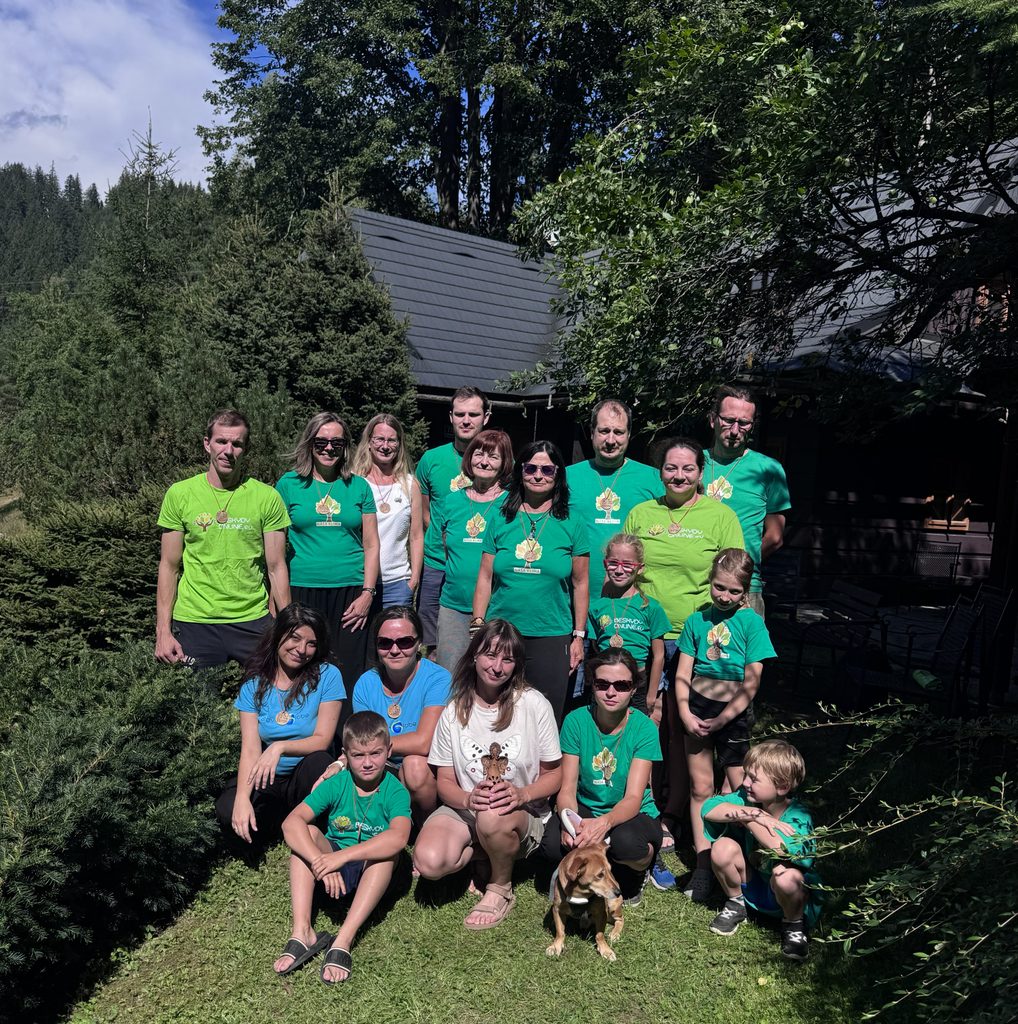
Researchers from the SLOVAKGLOBE Institute of Forest Ecology, Slovak Academy of Sciences, recently participated in a series of events in the Beskydy Living Lab, a cross-border initiative of the COEVOLVERS project connecting communities and nature in the Czech-Slovak Beskydy region. The major event of the week was certainly the opening of the exhibition: Coexistence of Man and Nature – Our Beskydy.
What is a Living Lab?
A Living Lab (LL) is a space where research and real-life experiences come together. Rather than studying communities and landscapes from a distance, LLs bring researchers, local communities, practitioners and other stakeholders together to explore challenges, exchange knowledge and develop new ideas in the places where these challenges actually occur. LLs therefore provide an opportunity to connect scientific knowledge with local experience and everyday practices. They can also create space for experimenting with new forms of cooperation and for exploring different ways of understanding the relationship between people and their environment.
The Beskydy LL is one of the Living Labs established within the COEVOLVERS project. Supported by the European Union’s Horizon Europe programme, the project aims to explore how nature-based solutions can contribute to the societal change needed to address the ongoing biodiversity and climate crisis. The Beskydy region represents an area of high biodiversity, but increasing droughts, torrential rainfall, and winter inversions are significantly affecting its traditional woody and snowy landscapes, posing risks to both local communities and nature. The Beskydy LL co-creates a common-pool resource regime for the climate-smart management of water and forests and shares it online (beskydyonline.eu). The digital platform enables the management of shared goods, communication, and the exchange of practices and enhances collective action in Beskydy.
A week of science, creativity and local experience
The programme in Velké Karlovice brought together activities for different generations and interests. One of the events, Coexistence in Nature, introduced children to the idea that people are not separate from nature but are part of a much wider living environment. Through activities designed for younger participants, the event created an opportunity to explore questions of coexistence in an engaging and accessible way.
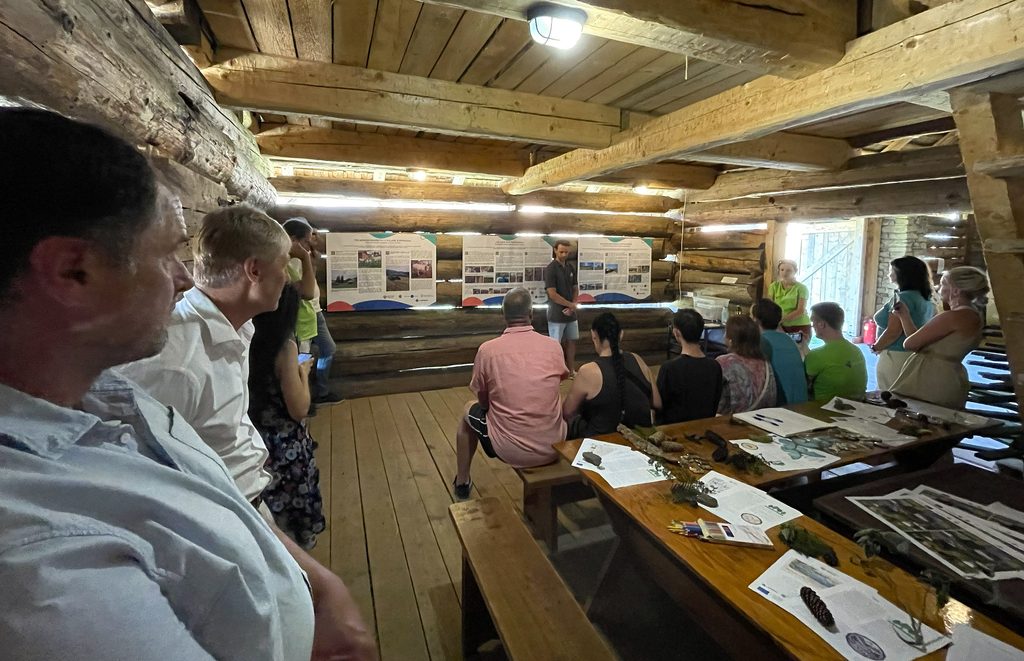
Another important part of the programme was the traditional discussion symposium in Velké Karlovice, organised for young scientists and doctoral students of the SlovakGlobe CETIP Network across the CZ-SK border. Dedicated to the memory of Prof. Jiřina Jílková, co-founder of CETIP, the symposium provided a space for discussion, critical thinking and creativity. Bringing together early-career researchers from different backgrounds, it encouraged participants to exchange ideas and reflect on contemporary environmental and societal challenges.
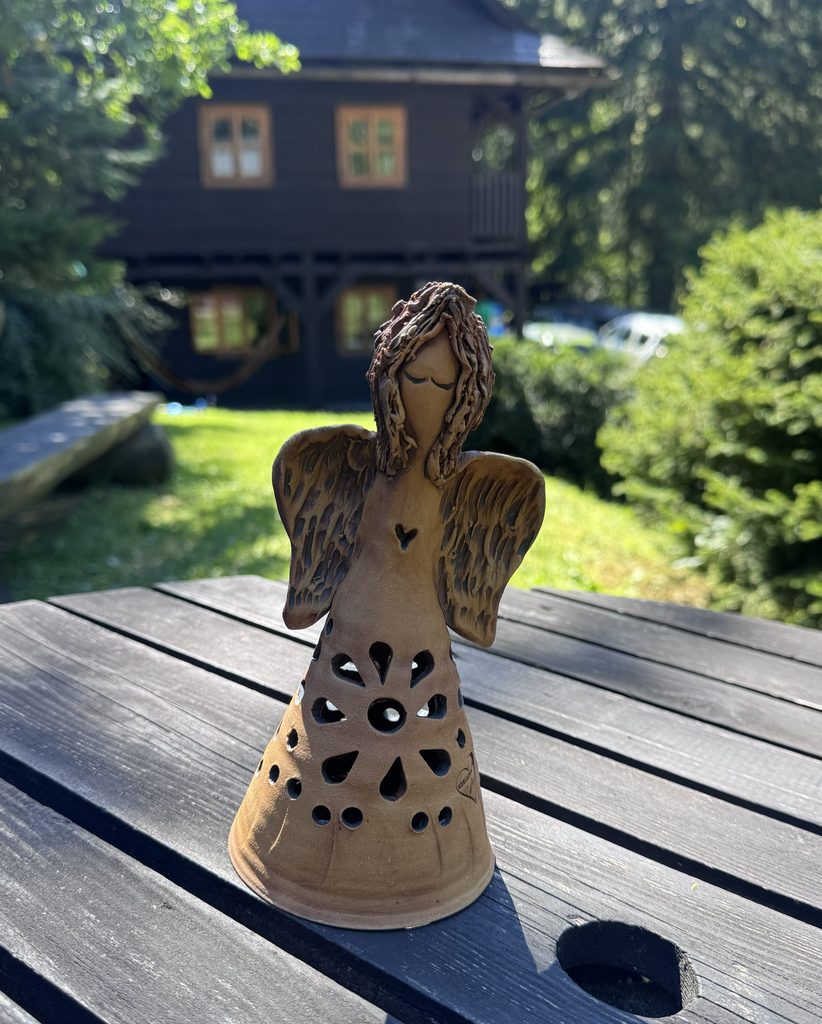
The symposium is traditionally donated by an original ceramic statue of the Angel of Hope from the Keramika Mili workshop located in the Leaving Lab, highlighting the importance of local knowledge and creativity. Milena Hošťálková creates original handmade ceramics with nature-culture symbols and becomes one of the stories on the Beskydy virtual platform.
The opening of the exhibition: Our Beskydy Mountains and the Coexistence of Man and Nature
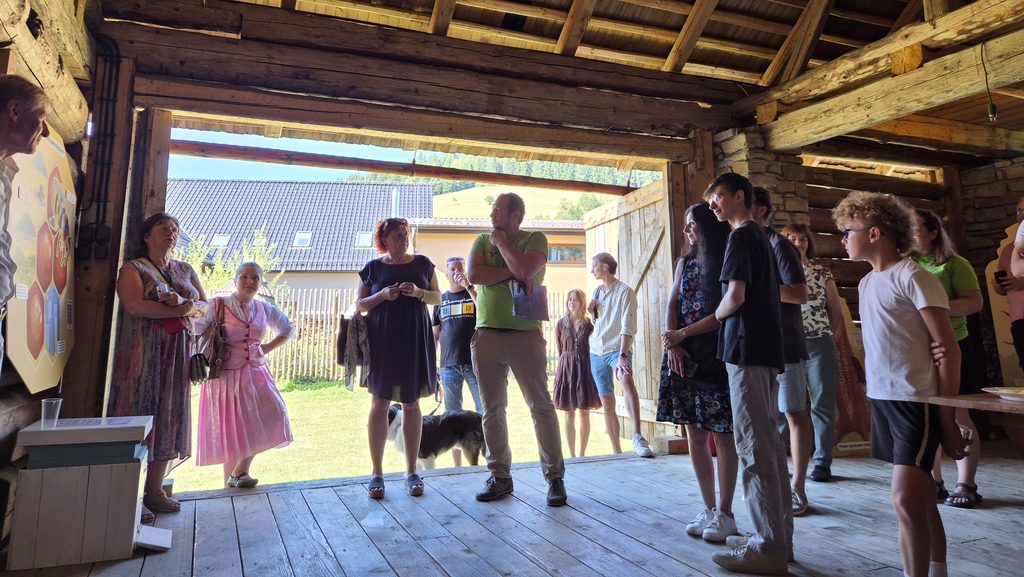
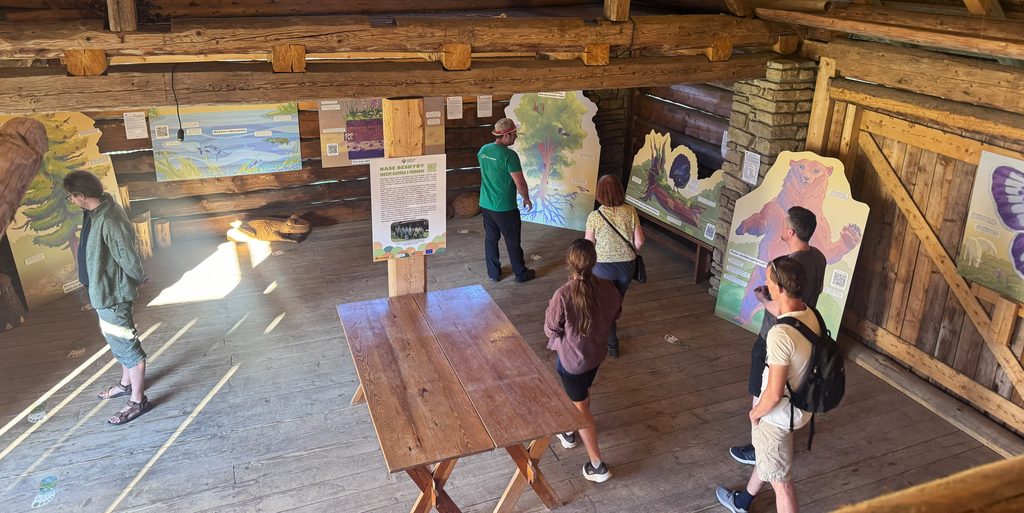
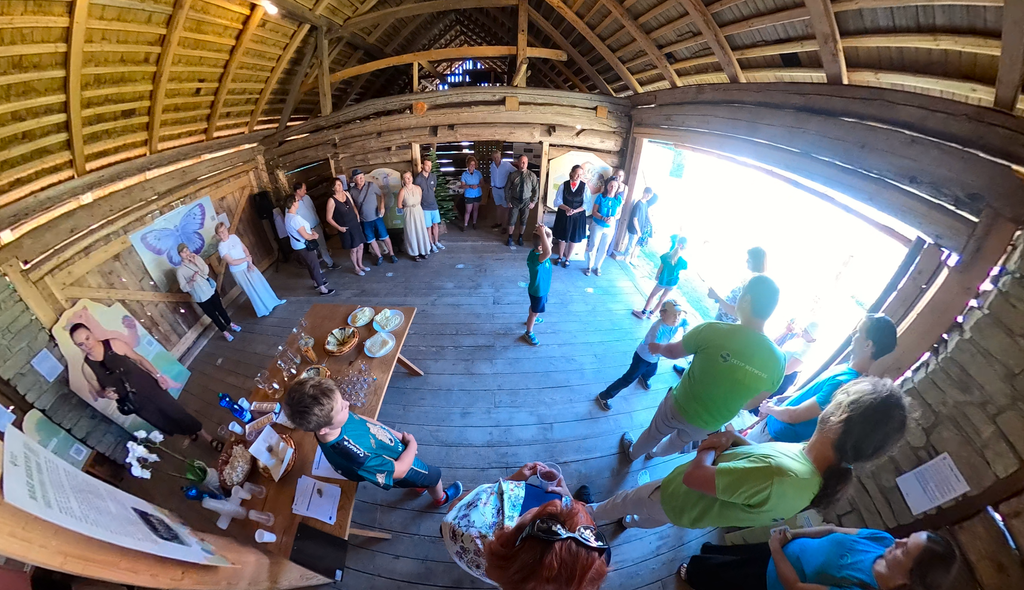
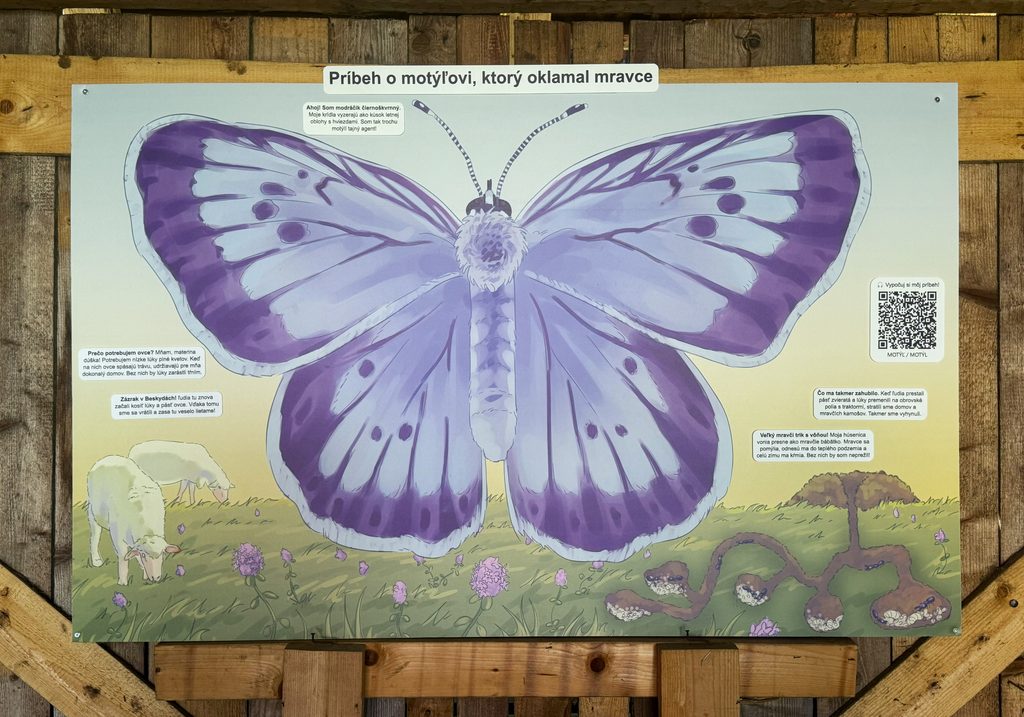
The week-long event concluded with the exhibition “Our Beskydy Mountains and the Coexistence of Man and Nature,” which opened on Saturday, 15 August, at the Information Centre in Velké Karlovice.
The exhibition, which is the result of co-creation with the community, explores the question of how the landscape of the Beskydy Mountains is changing and what role humans play in these changes, said Prof. Tatiana Kluvánková at the opening. Dr. Martin Špaček highlighted that, instead of presenting the landscape merely as a backdrop for human activities, the exhibition encourages visitors to view it as a shared space shaped by interactions between people, water, forests, soil, plants, and animals. Prof. Maria Kozová also explained that through interactive elements and stories, the exhibition presents the Beskydy landscape as a living and interconnected system. Visitors and the community are encouraged to think about how human activities influence the landscape, but also about how people depend on the many other forms of life and natural processes with which they share it, said the major of Velké Karlovice – Miroslav Koňařík, at the opening.
The exhibition is the result of collaborative work involving scientists from the Institute of Forest Ecology of the Slovak Academy of Sciences, CETIP and the Beskydy cross-border community, forming part of the COEVOLVERS project. It will remain open at the Information Centre in Velké Karlovice till end of September, allowing residents and visitors to explore the changing relationship between people and nature in the Beskydy Mountains.
Text: Elif Tugba Simsek, Institute of Forest Ecology SAS
Photo: SlovakGlobe, CETIP