

 SAS
SAS
 HRS4R
HRS4R 


Mgr. Katarína Adamčíková, PhD.
Department Head
Area of Research
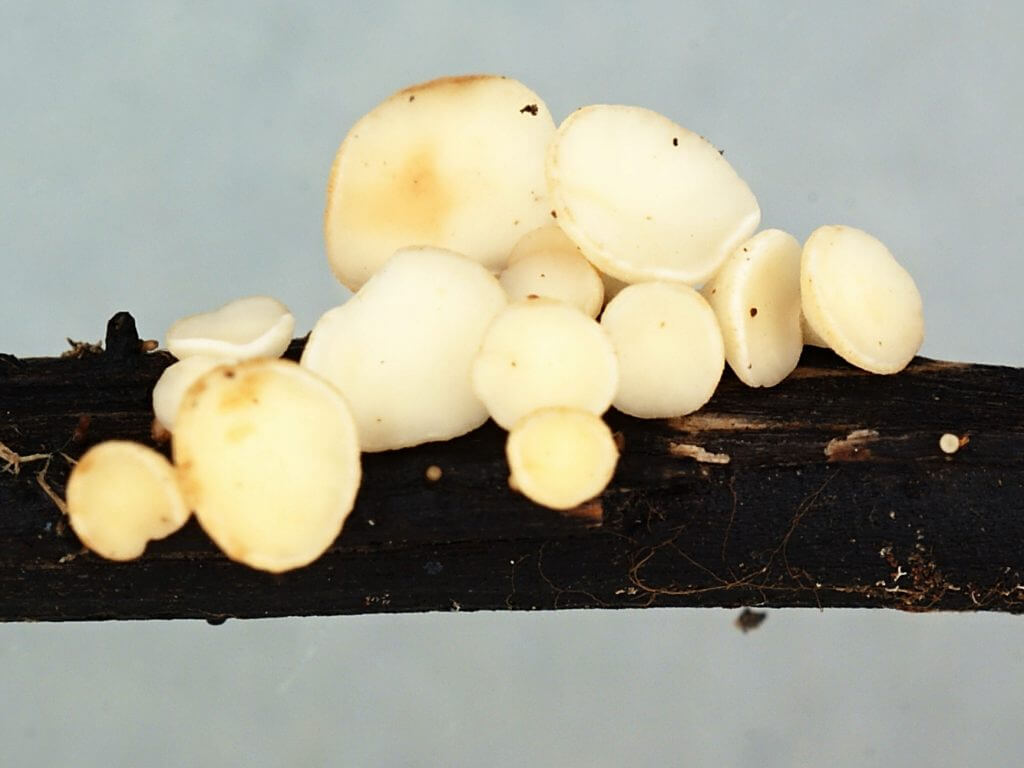
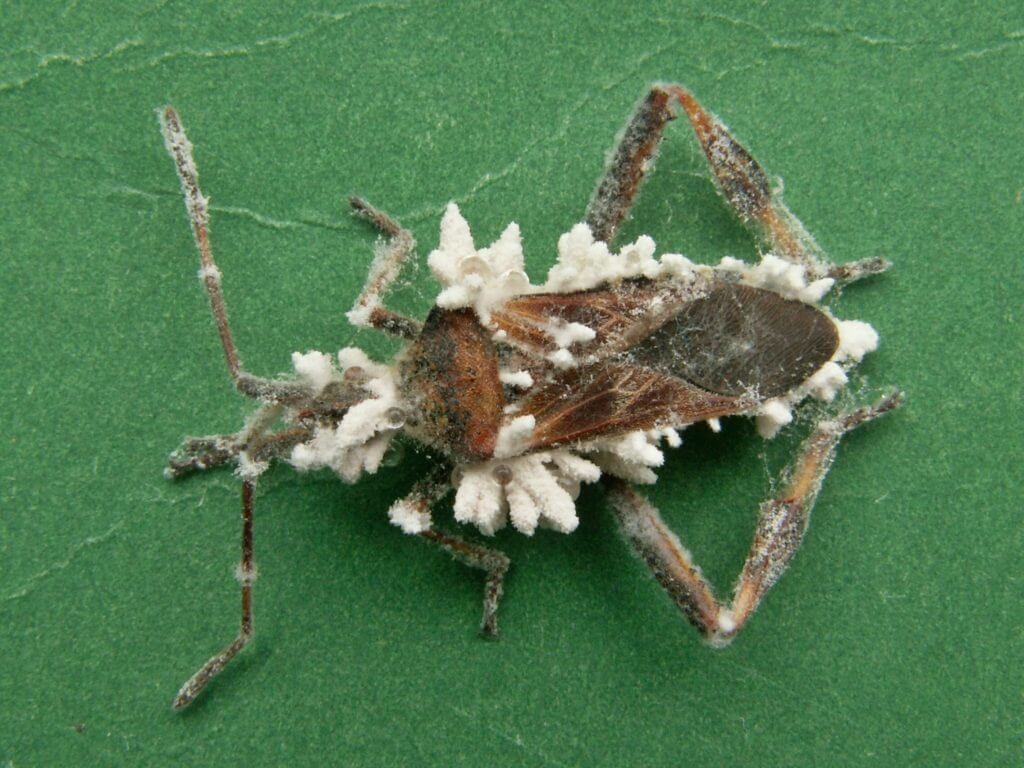
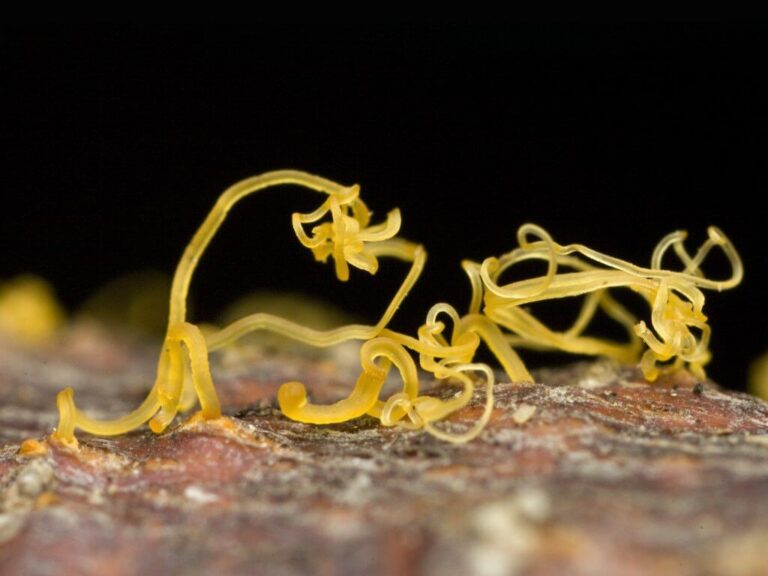
The Plant Pathology and Mycology research team is focused on diseases of trees in urban greenery and forest stands, pathogens and insect pest identification, host-pathogen interactions and pathogen biology studies. Members of research team deal also with fungal taxonomy and diversity, methods of tree protection, and effects of entomopathogenic fungi on insect pest populations. The research includes studies on the impact of climate and stand conditions on occurrence and spread of fungal diseases and insect pests.
Beside basic research our staff is involved in applied one (expert advices regarding health conditions and stability of trees).
Areas of research include:
- monitoring of fungal pathogens and/or disease spread, host range, disease extent and intensity
- isolation and identification of fungal tree pathogens (quarantine, invasive, novel species)
- fungal taxonomy, species diversity, morphological variability
- correlations between asexual and sexual stages of fungi
- characterization of fungal strains (virulence, vegetative compatibility, mycoviruses, reproductive-mating system)
- control measures: biological (mycoviruses, entomopathogenic fungi, antagonisms), chemical (trunk injection), resistance (identification of resistant individuals, trees susceptibility)
- impact of climate and stand conditions on disease occurrence and spread
- studies on entomopathogenic fungi infecting insect pests of trees, identification and prevalence of the fungi in host populations, and virulence bioassays in laboratory
- biology and ecology of invasive insect species trophically associated with trees
- population studies as population structure and diversity, the way of spreading, the gene flow and mode of reproduction and geographical distribution
Objectives
- to analyse the causes of the dying of trees and the relationships between host and harmful agents
- to study the impact of abiotic and biotic factors on ornamental trees in urban ecosystems
- to study the biology of plant pathogens and their control using conventional, biotechnological and ecological methods
- to identify bioclimatic and geographical factors affecting distribution area of fungal pathogens in connection with climate changes
- to study the role of entomopathogenic fungi in the control of insect pest populations
- to develop novel methods of entomopathogenic fungi implementation into the integrated pest management


Services
Non-destructive method of Acoustic Tomography for evaluation of tree stability in urban greenery
Relevant evaluation of tree stability could not be made solely by visual inspection due to hidden internal decay or initial decay. For relevant evaluation whether partial tree endanger human safety, health or property we recommend equipped evaluation of tree stability.
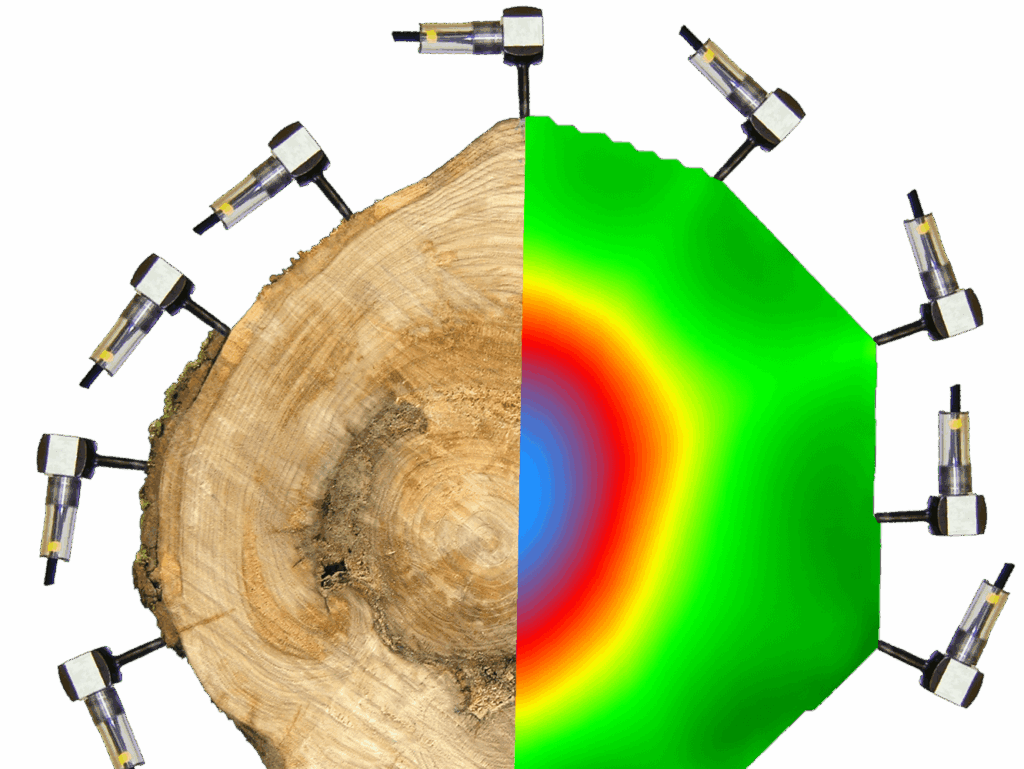
Acoustic tomography
- belongs to profile methods evaluating transverse section of tree trunk
- Fakopp 3D tomograph non-destructively detects extend and location of decay inside tree trunk
- principle is in sound waves velocity measurement (microsecond accuracy) among several sensors applied around tree trunk, while the velocity decrease in presence of internal decay or hollow
- final tomogram represents digital cross-section of internal structure of tree trunk (2D), possibly evaluation in more layers (3D)
- by ArborSonic 3D software the principal safety factor of stability is being computed based on additional data (tomograms, tree height, canopy area, trunk inclination, maximal wind velocity)
- evaluation of tree stability in the field takes approximately 10 to 30 minutes and it could be made almost all year round
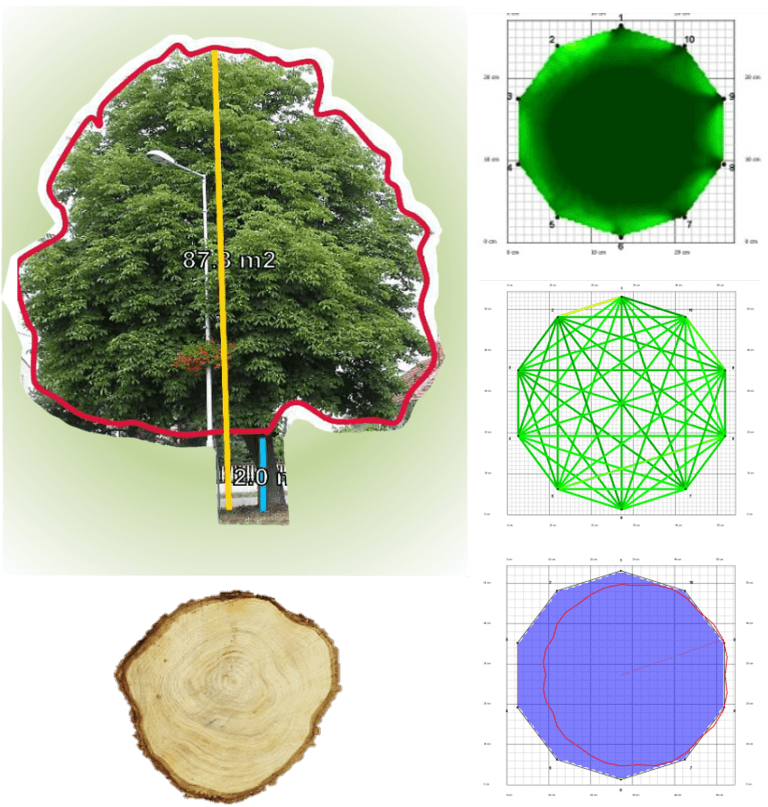
2D tomogram of healthy tree
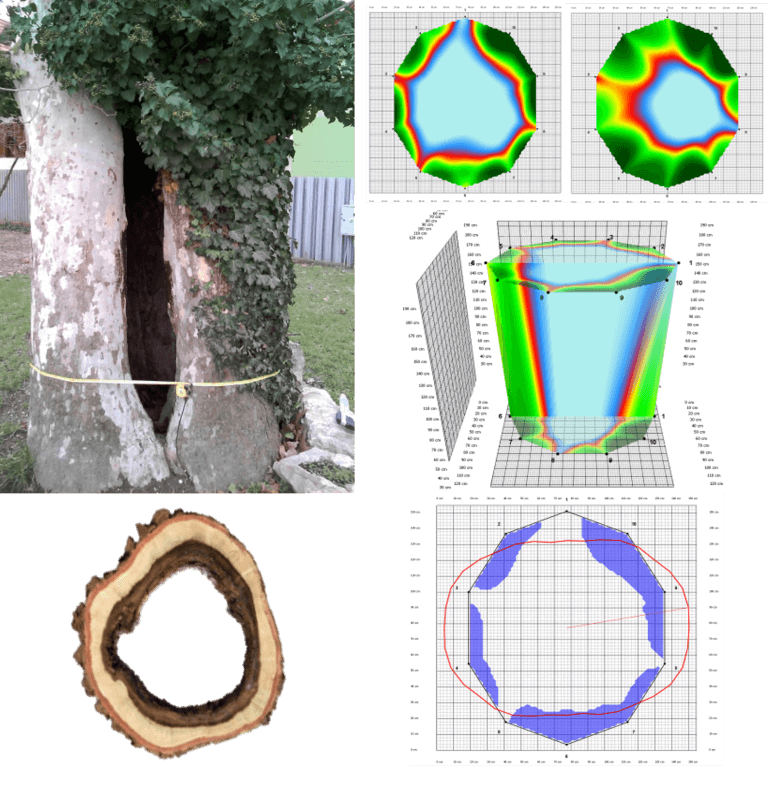
2D and 3D tomogram of decayed tree with decreased stability
Evaluation
Contact us for quotation of tree stability evaluation:
- @: katarina.adamcikova@ife.sk
- T: +421 908 902 539
Expertise includes
- visual evaluation of tree health state
- equipped evaluation of tree stability by using of Fakopp 3D tomograph (Fakopp Bt., HU)
- expertise elaboration of overall tree stability with relevant tabular and visual copy
- proposal of measures for preservation or increase of tree stability
References
- municipalities of towns and villages of Bratislava, Žilina, Komárno, Trnava, Pezinok, Martin, Nitra, Zvolen, Oponice, Dubová, Marcelová
Download
- Leaflet
- Order Form
Evaluation of root system stability by DynaRoot method
For complex evaluation of stability and safety of woody plant it is necessary to evaluate stability of crown and trunk (by visual methods, acoustic tomography) as well as stability of root system. Common question of woody plant stability may be windthrow of whole plant due to damage of root system.
Stability of root system by method of DynaRoot
- evaluates windthrow resistance of whole woody plant
- uses natural wind load in real conditions to evaluate dynamic stability of root system
- belongs to complex methods, in which stability of whole woody plant is being evaluated
- system consists of precise anemometer for registration of wind load and direction at crown level (10 m high pole) and high precision inclinometers for registration of lean of tree base (precision of 0.001°)
- software DynaTree (Fakopp Bt., HU) calculates safety factor determining windthrow resistance of tree using advances statistical methods
- evaluation of tree root stability in the field takes at least 2 to 4 hours under condition of minimal wind load (min. 25 km/h) during the evaluation
- evaluation could be made all year round for conifers, deciduous trees are advised to evaluate during growing season
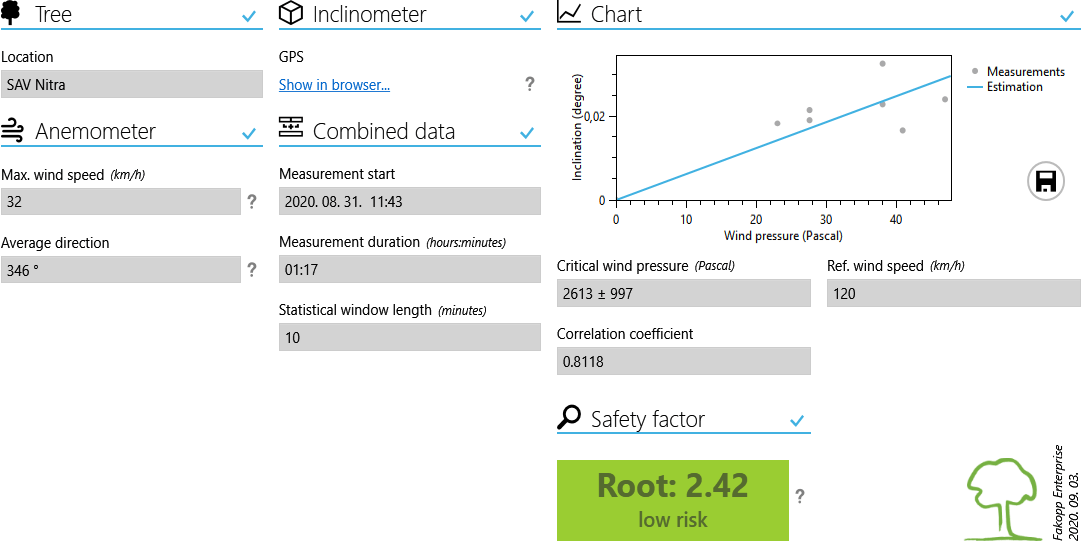
Diagram, critical wind load, correlation coefficient and safety factor of root stability
Values of safety factor
- SF > 1.5 = low risk
- SF 1.0 – 1.5 = moderate risk
- SF < 1.0 = high risk
Evaluation
Contact us for quotation of tree root stability evaluation:
- @: katarina.adamcikova@ife.sk
- T: +421 908 902 539
Expertise includes
- visual evaluation of tree health state
- equipped evaluation of tree root stability by using of DynaRoot (Fakopp Bt., HU)
- expertise elaboration of overall tree stability with relevant tabular and visual copy
- proposal of recommended measures
Download
- Leaflet
- Order Form
Project VEGA 2/0062/18 Map set
Map set of locations with presence of the fungus Hymenoscyphus fraxineus on ash trees in Slovakia.
Download